Is It Legal to Wear an Amazon Bee? Recording Consent in the US and India
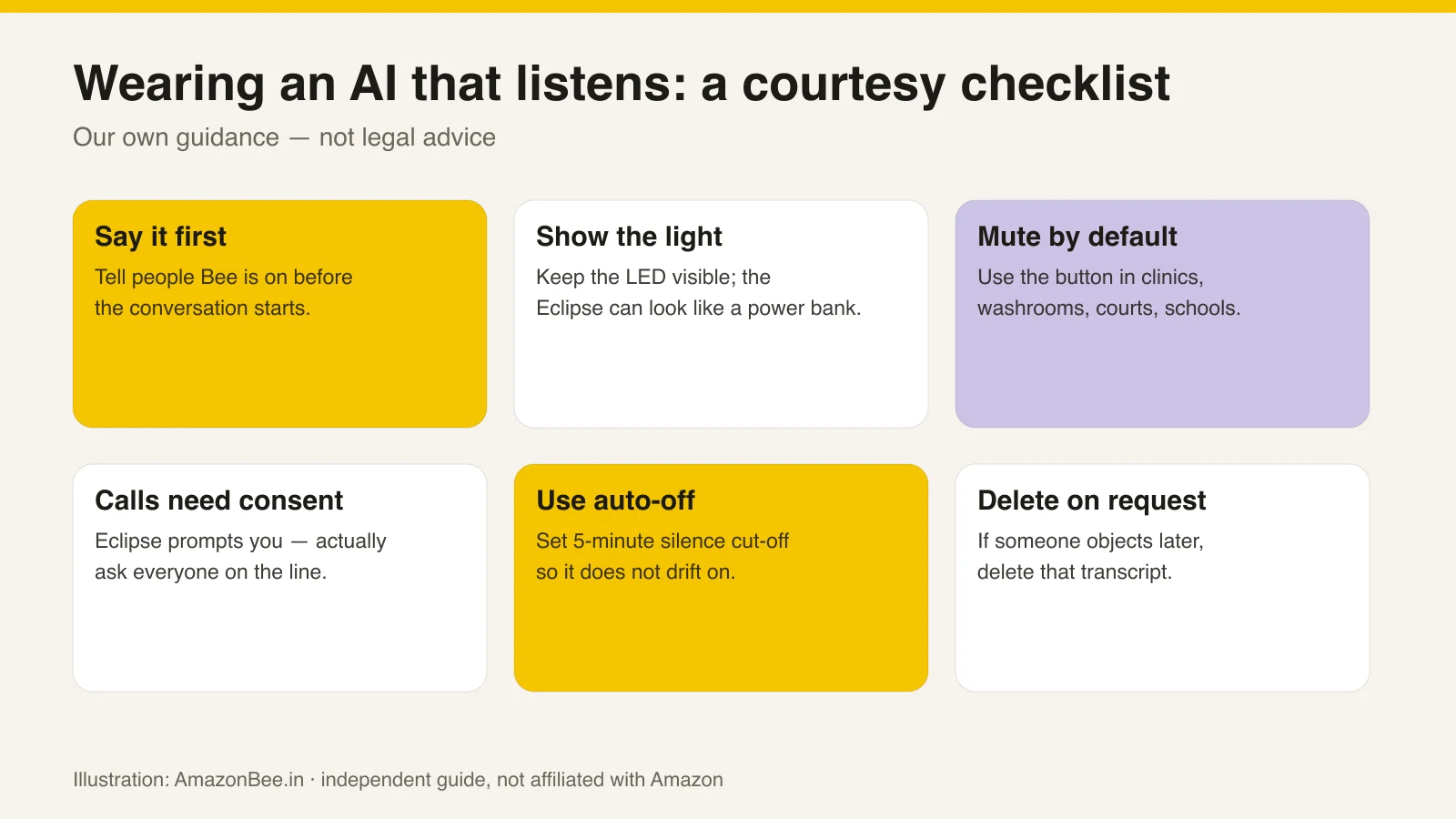
This is general information, not legal advice. If recording is central to your work, ask a lawyer where you live.
Bee devices capture conversations — which means other people's words. Amazon's design deletes the audio, but a transcript of what someone said is still a record of them.
The United States: depends on the state
US law splits into two camps:
- One-party consent: you may record a conversation you are part of without telling the others. This is the federal rule and most states'.
- All-party consent: everyone must agree. California is the best-known example, and several other states follow similar rules.
A wearable carried across state lines can move you between regimes mid-trip. The Eclipse's call-consent prompt helps, but it only reminds you to ask.
India: no single recording law, but a privacy law
India has no one statute that says when a private conversation may be recorded. A few things matter:
- Privacy is a fundamental right under the Constitution, recognised by the Supreme Court in 2017.
- The Digital Personal Data Protection Act, 2023 governs how personal data is processed. It has exemptions for purely personal or domestic use, but using Bee in a business or professional setting — client calls, interviews, patient consultations — can look very different.
- Telephone interception by third parties is regulated separately. Recording a call you are on is a different situation, but courts have weighed privacy against evidence case by case.
- Workplaces, hospitals, courts and schools often have their own rules forbidding recording.
Practical rules that keep you safe almost everywhere
- Announce it. "I'm using an AI note-taker — okay?" covers you in all-party jurisdictions and is simply polite.
- Turn it off when you are not part of the conversation. Bee is meant for conversations you are in, not for overhearing.
- Avoid sensitive places by default: clinics (unless it is your own appointment and the doctor agrees), washrooms, courtrooms, classrooms with children.
- Delete on request. If someone objects later, delete that transcript.
- Do not turn on shopping or email links for work conversations that involve other people's data.
 Illustration: AmazonBee.in. A courtesy checklist for anyone wearing a Bee.
Sources: Amazon: Introducing Bee Frontier and Bee Eclipse · Engadget launch report. Specifications are as published at launch (15 October 2026) and may change. AmazonBee.in is an independent site and is not affiliated with Amazon.